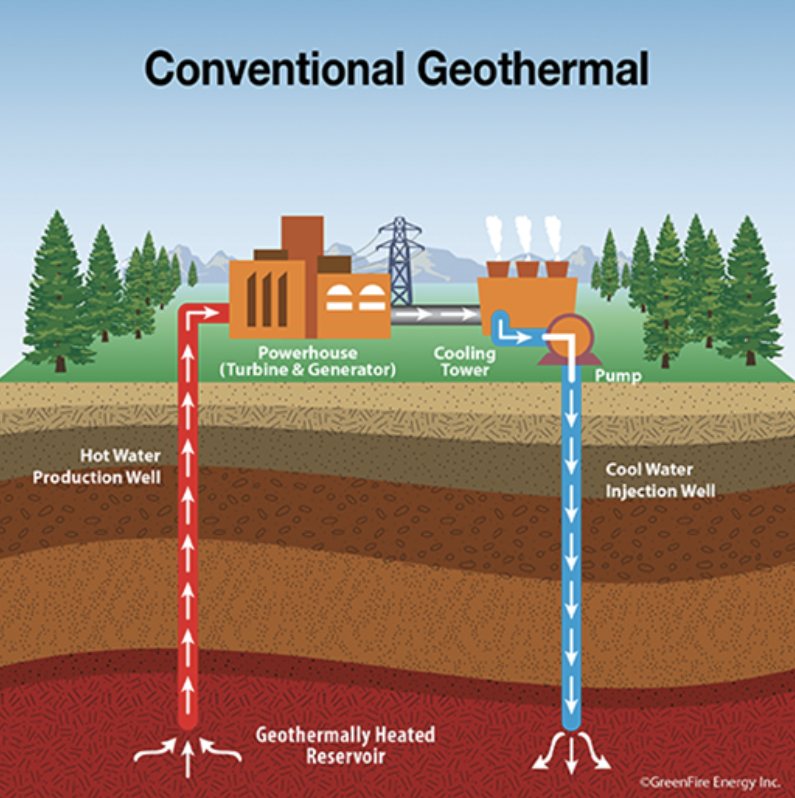
For decades we burned oil to heat buildings. Today, heat‑pump technologies (including ground‑source geothermal) are already displacing large volumes of heating oil across North America — on the order of hundreds of millions to a few billion litres per year depending on assumptions and which homes are converted.
Quick snapshot & sources
Ground‑source & heat‑pump performance (COPs, guidance): Pacific Northwest National Lab — Ground‑Source Heat Pumps resource guide: https://lnkd.in/gxAYrbru
U.S. heating‑oil use & household data (context): U.S. EIA — Use of heating oil: https://lnkd.in/g3UPxwHb
Global scale‑up and policy context for heat pumps: International Energy Agency — Heat Pumps report: https://lnkd.in/g2MQVJbc
Technology cost/performance data (ATB): NREL — Annual Technology Baseline: https://atb.nrel.gov/
Emission factors / litres → CO2 conversion: Environment and Climate Change Canada — Sources & fuels:
Why this matters
Heat pumps (air‑ and ground‑source) deliver much higher seasonal efficiency than combustion systems in many climates, cutting on‑site fuel use and indoor combustion pollutants. See PNNL guide: https://lnkd.in/gxAYrbru
Real projects
Transparent calculation
Typical oil‑heated household consumption varies widely by region. Using two plausible averages shows the range of displaced oil:
1. Conservative case: 400,000 converted homes × 1,500 L/home/year ≈ 600 million L/year displaced.
2. Higher‑use case (oil‑dependent homes): 400,000 converted homes × 4,500 L/home/year ≈ 1.8 billion L/year displaced.
CO2 conversion (example): ~2.7 kg CO2 per litre of heating oil → 1.8 billion L ≈ 4.9 Mt CO2 avoided; 600 million L ≈ 1.6 Mt CO2 avoided. Emission factors: https://lnkd.in/gzCc97yZ
What surprises you most about these numbers? Have you seen geothermal or heat‑pump growth in your region — in homes, schools, or stores? Share a photo or a quick note below.